


Editor’s note
A word on these posts before we get into it. These are reports not lessons. I don’t have answers - or solutions. I’m sharing here because I’m in rehab. Still repairing. And I feel compelled to.
If it works for you, great. Take what you need and leave the rest.
New to the Repairshop? Start here: What are we optimising for
I’d followed the old maps and it drained me. And like every ‘expert’ in the field, I was paid for being ‘right’ in front of the client. There’s a cost to that posture. I’d never really thought much about it. In the comfortable pod, there’s always ‘feedback’, and it was the manager’s comment that rebounded later in unforeseen ways.
Sharpen your critical thinking.
Curt nod. Then shuffle performance review docs, with little real interest in it aside from countering the internal ego stab. Inferiority. And how to make it all go away. Quickly.
In the milliseconds available between client delivery task actions, I conceded the point, but it was not fully understood then.
Critical thinking landed later. Via Stoic Wisdoms Substack in fact:
Critical thinking is harder than you think
That did the work. Unlocked the gate. It allowed the adjustment and fitting of a new lens. A seeing tool to direct the focus of innate curiosity inward. The mind, a sword measured to cut through delusion.
Wrote a note on the post and restacked it:
“Question what you believe. It might be the most tranformative step you ever take.”
Typo included - a genuine fingered miss on mobile. The note mirroring the signal back to the noter.
Didn’t expect that to travel. Still running hot as these words fall. It resonated.
Stoic Wisdoms writes:
“Think about the last time you read something that confirmed exactly what you already believed. Notice what happened next… You absorbed it. The feeling of being right moved so fast through you that by the time you finished reading, the claim had already become belief."
Assayed. Felt that. Movement inside the body as the words landed.
Back on the ledge. In Madeira. At the Garden of the Sea.
Belief.
Whose?
And what truth?
A few weeks after leaving the job, I published an AI-scripted LinkedIn post without a second thought. Everything for a reason. No such thing as failed experiments. Always learnings. True.
AI has removed so much friction; drop in an idea sentence, and boom, out pops an article. Looks credible, sounds smart. Very little thought needed, paragraphs of content effortlessly produced - in seconds. Click. Click. All done.
But mostly, it all reads and sounds the same. You feel the pattern landing immediately. A sanded husk remains. Consider the natural diversity present in the world. Then imagine if every leaf on a tree looked exactly the same. Out of place. The green screen of the movie world. Even the arguments persuasively placed land as truth. It’s everywhere, becoming the new normal.
All great changes come with disruption. Restructuring of people, economies; it’s present in the historical record of any civilisation you care to look at. AI in itself was never the biggest challenge. Being able to adapt fast enough may well prove to be.
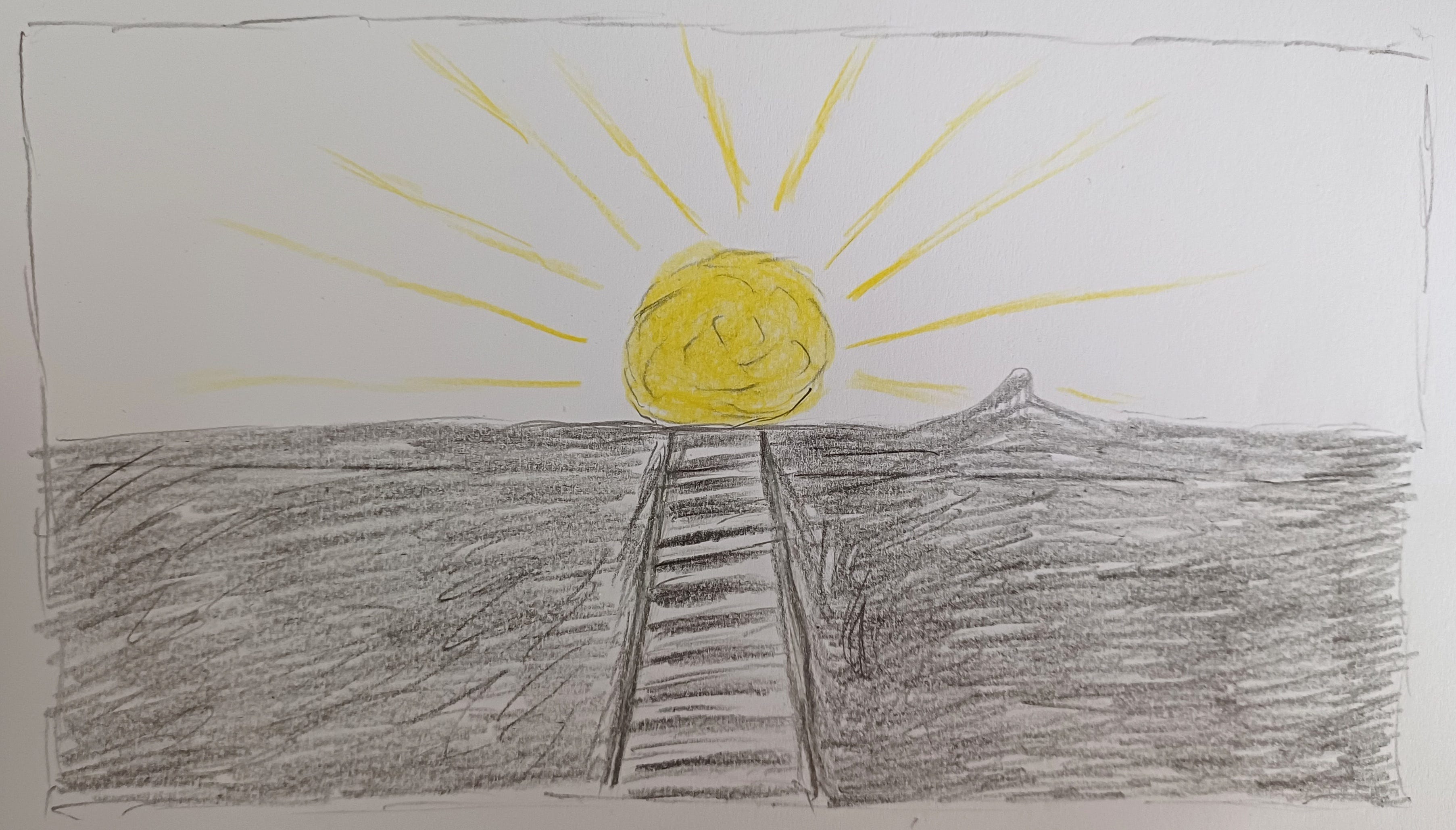
There’s nothing new to see here beneath the tech. The old map remains, iron rails laid, grooves worn and shining in the sun. It just got a new time machine engine installed. Same shape. More speed. Faster loop.
A lingering question remained:
What are we optimising for?
That’s exactly where the faux costume LinkedIn post I’d written ran out of road. It hit the buffers hard. Dead stop. LinkedIn is the professionals’ showroom. Carefully crafted and curated. Marketing and advertising. Selling. Claim the expert’s seat.
My own engine gassed and fires lit up to present the ‘insight’. The AI prose a quick route to the required deliverable; buffed and ready to tap dance to the tired old tunes.
The content was valid. Lived experience from a professional experimenter. No question. And in some ways, Repairshop’s register. My writing style does have some AI-ness to it. Not deliberately - and it might even handicap it if I’m being honest.
There’s no getting away from the incredible pattern recognition humans have. Once seen, patterns are easily caught and judged. Ever played the yellow car game driving? First person to spot the yellow car and shout wins. Lens narrows. Yellow cars stand out. Same with AI writing. Pattern locked. You see it everywhere. Every time.
And cognition is fast. this isn’t the logical part of the brain. It’s the limbic system running at 60ms. If that wiring is imprinted, whatever’s read and fits that pattern dies. Instantly. Not that the ‘author’ would ever know.
There is truth and value in that LinkedIn post, genuinely, but it was machine manufactured and structured AI-speak. As said. See it once. See it everywhere. Discount it.
No jobs.
No future.
End of civilisation.
The dark seeps all around. Like the wraith’s chill. Cold seeping forth, frost creaking, cracking, enveloping all. Compression. Shrinking. Breath shallow. Cortisol flowing, flooding the senses. Overwhelming.
Thus is fear perceived and felt in the body, the narration comes from the ‘voice’ in your head.
What does AI point at? This future fear running off the projector in the head, reinforced across every screen and feed.
Yoda on the future [The Empire Strikes Back] “Difficult to see... Always in motion is the future”
Uncertainty
If AI claims most jobs and the economy collapses, civilisation falls, what then?
I can’t tell you - it’s a projection based on fear.
The first beams of light weak, growing gradually stronger. Breathe deep, energy rises, darkness retreats, frost melts. Surrender to what is.
All there. Is.
Here’s the companion post to the earlier piece that asked this question of a life, not the machine: What are we optimising for?